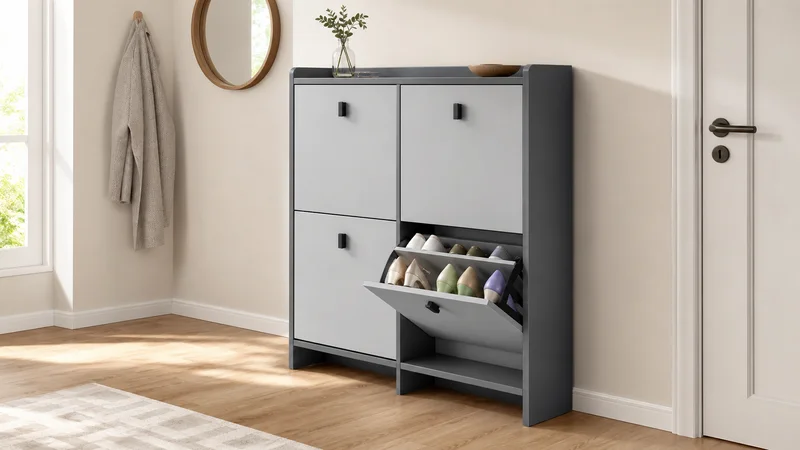
The Slim Grey Four-Door Shoe Cabinet is designed for a different entryway requirement from a deeper two-door cabinet: control the hallway projection first, then use width and vertical storage to build a more substantial shoe-storage offer. The current product record gives this route 17 cm and 24 cm depth options, widths from 80 to 120 cm, and a reference height of 119 cm.
For buyers planning apartment, retail, ecommerce, or project ranges, that combination is useful because a narrow passage does not always need a very small product. A wider front can give the assortment a stronger visual presence while the shallow body helps protect circulation space. It belongs in the shoe cabinets category, but should be specified as a slim-depth, multi-door cabinet route rather than compared only by finish color.
Start with hallway clearance, not shoe capacity claims
The first decision is whether the target installation can accept a 17 cm or 24 cm depth. Both routes are intended for compact entryways, but the practical result changes with skirting boards, door swings, wall clearance, intended shoe sizes, and local safety requirements. A buyer should use an installed-depth drawing rather than assume that a narrow cabinet can fit every corridor.
Width is the second filter. The available direction runs from 80 to 120 cm, allowing the same two-tone grey concept to be considered across several wall spans. The listed 119 cm height also creates a more vertical storage profile than a low bench or console. Final dimensions, usable internal arrangement, and carton size should still be confirmed against the selected width before a sample is approved.
What the grey multi-door direction adds to an entryway range
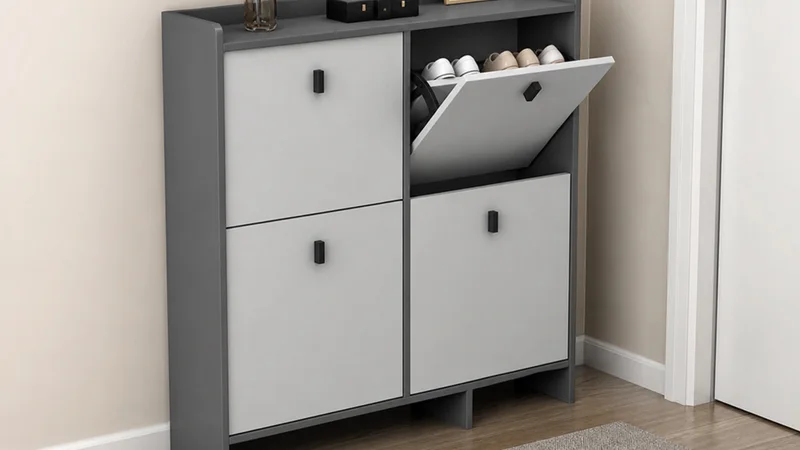
The product route uses a dark-grey cabinet frame with lighter-grey fronts and small dark handles. This gives buyers a neutral two-tone option that can sit between all-white storage and warmer oak-and-white collections. The four-door layout is intended for a broader shoe-storage direction, while the compact depth keeps the product focused on hallway and apartment use.
The supplied reference image demonstrates the opening concept but does not establish a fixed shelf count, exact pair capacity, board thickness, hinge or flip mechanism brand, or maximum loading. Those details should be requested in the RFQ. A realistic quotation needs the chosen depth, target footwear type, front-opening method, internal fittings, and the market's wall-fixing or anti-tip requirement.
How to position 17 cm and 24 cm routes
A 17 cm route is relevant when a buyer is working against a very tight corridor limit. It should be assessed with the selected shoe-storage mechanism and the target user's footwear rather than presented as a universal capacity solution. A 24 cm route may offer a different practical balance, but it also changes the cabinet projection, carton dimensions, and how the product sits beside a door or circulation path.
For retail ranges, these two depth directions can be positioned as a planning choice, not as duplicate SKUs. Merchandising should show the front view, installed side depth, opening movement, handle detail, and a scaled hallway setting. For ecommerce, request an accurate size diagram and assembly or wall-fixing reference before launch. Those materials answer the questions that a single styled front image cannot.
Sampling and export checks
The current product record specifies a panel-furniture route confirmed by RFQ, a dark-grey and light-grey two-tone finish direction, and a 30 to 45 day lead-time direction after order details and sample confirmation. MOQ, final material route, hardware, packaging, and loading plan remain quotation items. Buyers should confirm all of them against the selected width and depth, especially if this cabinet is intended for a multi-warehouse ecommerce or project program.
During sample review, check cabinet stability, front alignment, handle position, door or flip movement, edge treatment, finish consistency, exposed side panels, hardware bags, and assembly instructions. For export packaging, confirm corner protection, panel separation, label placement, spare hardware, and carton handling expectations. The cabinet furniture packaging and QC guide gives the wider checklist for protecting panel furniture through transit.
Compare the route by depth and opening preference
The Vintage Black Two-Door Shoe Cabinet takes the opposite depth direction: its listed 34 cm body supports a more substantial, deeper cabinet profile. It is not a size variation of this slim grey route. Buyers should choose between them based on corridor clearance, storage expectation, target visual style, and the intended installation setting.
For another slim, lighter direction with three flip compartments, review the Handleless White Three-Flip Shoe Cabinet. The Grey Two-Flip Shoe Cabinet with Drawer is also a different structure and height route. The narrow shoe cabinet collection is useful for initial comparison, but the final selection should always follow the approved size, opening method, finish, and packing specification.
Use slim entryway furniture in a wider one-stop order
A buyer does not need to fill a container with one entryway cabinet. This shoe cabinet can be reviewed together with coffee tables, TV stands, sideboards, drawer chests, and other cabinet furniture when building a broader home-furnishing range. Furniture Sourcing Plus can coordinate product references, RFQ follow-up, packaging checks, and mixed-loading discussion through one sourcing contact.
For a practical enquiry, send the preferred depth and width, target market, opening preference, finish reference, quantity plan, packaging standard, and the wider buying list. The mixed-SKU furniture container planning guide explains why carton data should be collected before several furniture categories are combined. Buyers can start from this product page, compare the deeper vintage-black cabinet route, or send the requirement through the inquiry form.