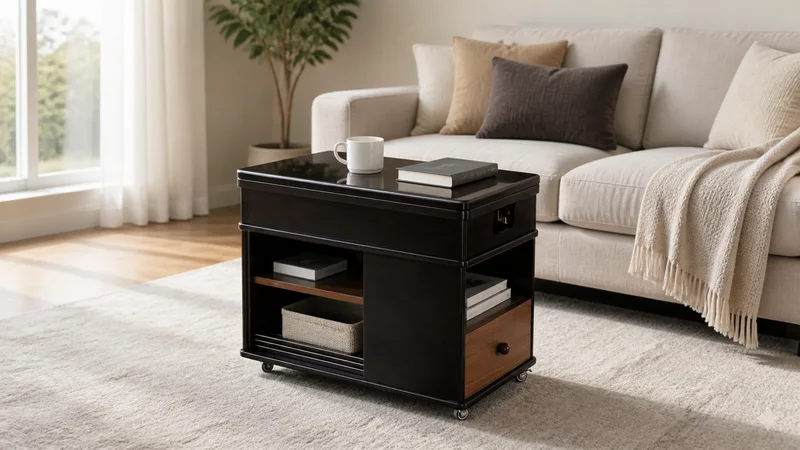
The Compact Storage Coffee Table is a useful product direction when a buyer wants a small cabinet-style living-room SKU that can be specified in more than one tabletop state. The current product record lists a 700 x 400 mm closed size direction, a 700 x 800 mm expanded size direction, and a 560-760 mm height direction. The visible product route combines a glossy black table surface, open front storage, a wood-tone side drawer, and a caster base.
For apartment, retail, and ecommerce ranges, the value is not simply that the table opens. It is that one compact body can be reviewed for a lower everyday table position and a wider, higher worktop position. Those two states must be documented and sampled as an approved configuration. Within the coffee tables and side tables category, this is a moving-part storage product, so the RFQ needs more detail than a fixed coffee table.
Plan the closed and expanded states as separate commercial views
The closed 700 x 400 mm direction helps buyers assess the product against normal living-room circulation and a compact sofa-front position. The 700 x 800 mm expanded direction gives a wider tabletop reference for temporary work, tea, snacks, or display. These figures are starting points for a sourcing brief, not a substitute for an approved dimensioned drawing. Confirm the measurement points, overall cabinet footprint, tabletop overhang, opening clearance, and any required distance from a sofa or wall.
For an ecommerce listing, show each approved state separately. Use a closed front image, an expanded overview, a side view, a dimension diagram, and a motion sequence from the sample. Buyers should not infer the open size or operating method from a single styled scene. That prevents the common problem of marketing a transformable table as if every reference image represents one final production specification.
Use the 560-760 mm height direction carefully
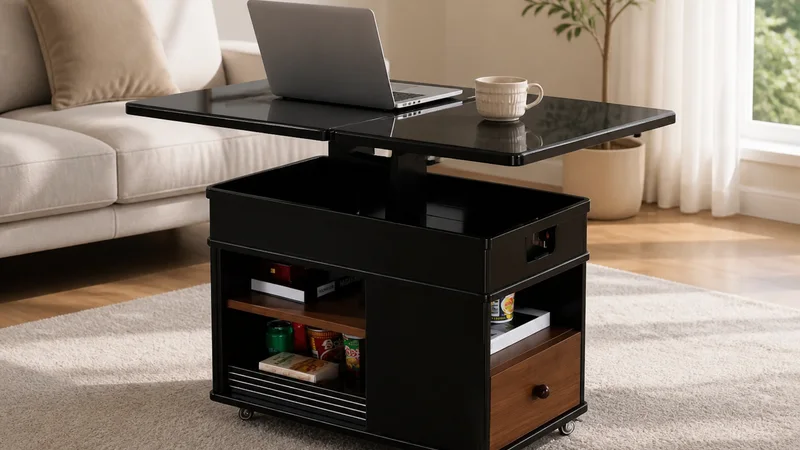
The product record gives a 560-760 mm height direction. That range is useful for separating a low living-room use case from a higher tabletop use case, but the source record does not establish the exact adjustment mechanism, increment positions, locking method, load rating, or safe operating procedure. Those details need to be confirmed on the approved factory drawing and sample before they are described as buyer-facing product features.
During RFQ, ask the factory to specify which tabletop sections move, how the table transitions between the approved states, whether a lock or brake is used, and what testing or use limits apply. Include clear photos or video from the sample. A concise answer to these questions is more useful to a furniture buyer than a broad “multifunction” claim.
Keep visible storage and finish claims accurate
The supplied product reference shows a black cabinet body with a black glossy tabletop, an open front shelf area, a lower horizontal slat detail, a wood-tone side drawer with a round pull, and small caster wheels. These visual elements give the piece a compact cabinet character rather than the appearance of a simple table. The current record lists Black and White finish directions, an MDF cabinet body with eco-board surface, and a painted finish. The article imagery uses the black direction to keep the visible product structure clear.
Internal shelf dimensions, drawer capacity, surface material thickness, wheel specification, and hardware brand are not fixed in the public product record. They should be quoted against the selected version. Buyers should request front, side, rear, open-storage, drawer, caster, finish, and close-up hardware images from the approved sample before using the item in a retail catalogue or online store.
Sample the moving parts before scaling the SKU
For this type of table, sample review should cover more than the finish. Check tabletop alignment in each approved position, motion smoothness, stability, panel gaps, exposed fasteners, edge treatment, drawer movement, caster movement, and whether the table stays secure while changing states. Any statement about load, locking, or safety must come from the confirmed version, not from a reference photo.
For retail and ecommerce teams, request an approved asset set that includes the closed state, expanded state, raised state, front storage view, side drawer view, side profile, rear view, tabletop mechanism, product dimensions, carton, and finish samples. This allows the buyer to explain the product clearly while keeping every image tied to the actual production configuration.
Compare the layout, not only the size
The Height Adjustable Storage Coffee Table is a useful comparison when a buyer wants a different adjustable-storage direction. The Folding Lift Top Coffee Table uses another cabinet layout with a fold-out surface and raised tabletop direction. The Compact Side Table Cabinet is a smaller sofa-side storage route. These products should be quoted separately because their tabletop movement, storage layout, dimensions, and cartons are not interchangeable.
For related sourcing perspectives, read the folding lift top coffee table worktop guide and the two-tone expandable coffee table guide. They cover different table structures, while this article focuses on the compact black cabinet body, open-front storage, side drawer, and variable-height tabletop direction.
Confirm the packing route before combining furniture categories
The current record lists a reference packing size of 79 x 48 x 95 cm and an approximate packed weight of 37 kg. Reconfirm both against the final finish and approved moving-part configuration before freight booking. For export packing, review tabletop restraint, corner protection, panel separation, caster protection, drawer restraint, hardware bags, carton strength, labels, and handling marks.
The cabinet furniture packaging and QC guide provides the wider inspection sequence. This table can be sourced alongside TV stands, sideboards, drawer chests, shoe cabinets, and other cabinet furniture through one buying list. The mixed-SKU container planning guide explains why each product needs confirmed carton data before categories are combined into one shipment.
Send a useful sourcing brief
Send the target market, required closed and expanded positions, selected finish, quantity plan, preferred storage and drawer requirements, packaging standard, and other furniture categories to combine. Furniture Sourcing Plus can coordinate product references, sample questions, packing checks, and mixed-loading discussion through one sourcing contact. Begin from this product page or send the buying brief through the inquiry form.