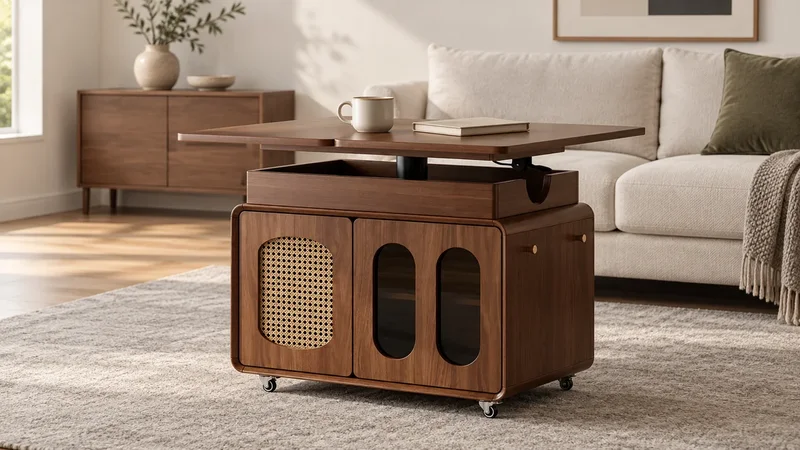
A coffee table does not have to remain at one fixed working height or hide every item behind an identical door. The Height Adjustable Storage Coffee Table combines a raised tabletop, an open tray beneath it, enclosed cabinet storage and caster wheels in one compact living-room unit. Its walnut direction also uses a woven cane panel and two dark oval windows, giving retailers a product with more visual character than a plain box table.
This article covers Product No. FSP-CT-HX-MODEL-31. It is intended for buyers considering apartment furniture, ecommerce ranges, retail collections or mixed furniture orders. The visible features are useful, but the moving mechanism, usable storage and carton data still need to be checked on the exact version before a quotation or product listing is approved.
What buyers can see in the product reference
The rectangular tabletop is shown raised above the cabinet on a central black column. A shallow open tray sits between the top and the main cabinet body, providing accessible space while the tabletop is elevated. The left front panel contains a rounded-rectangle woven cane insert. The right front section has two tall oval dark windows, allowing some interior visibility without making the entire cabinet transparent.
Four small caster wheels support the cabinet. They indicate a mobile furniture direction, but they do not establish wheel load, brake configuration, floor compatibility or movement under a loaded tabletop. Those points need sample testing. The reference also shows a small side fitting; its purpose and final hardware specification should be confirmed rather than described from the image alone.
Use the height range as a planning input
The current database record lists a 72 × 40 cm tabletop footprint, with an approximate height direction from 62 cm when lowered to 86.5 cm when raised. A supplier reference image associated with this item shows approximately 63 to 85 cm. Because those figures differ, the final approved engineering drawing must decide which measurements are used in the quotation, website listing and packaging documents.
Height adjustability can help a compact table serve different seated activities, but the record does not provide a certified ergonomic claim or a tabletop load rating. Buyers should test the lowest and highest positions with their target sofa height, verify the effort required to operate the mechanism, and check stability at intermediate or fully raised positions. Ask whether the tabletop must be clear before adjustment and request safe-use instructions for the final mechanism.
Storage is divided into visible and concealed zones
The open tray beneath the tabletop is suited to frequently accessed objects, subject to its final internal dimensions and mechanism clearance. The cabinet below provides enclosed storage behind the front panels. The cane insert and oval windows create separate visual treatments, but an exterior image cannot confirm shelf count, ventilation performance or usable capacity.
Request open-door photographs, internal measurements and a clear drawing of the door layout. Check the cane panel attachment, glass or transparent-panel material, hinge alignment and edge finishing. Do not assume the dark windows are tempered glass or acrylic until the supplier identifies the material in writing.
Finish options should be treated as separate approval routes
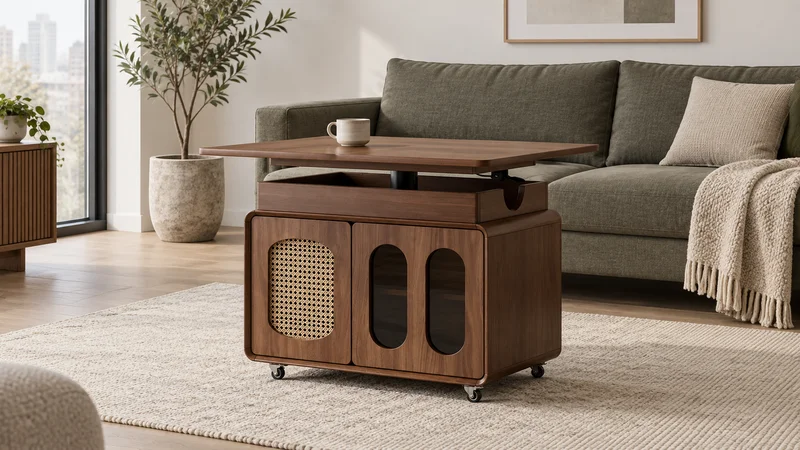
The current sourcing record lists wood grain, white-and-walnut, walnut, and black directions. The generated scenes here use the walnut reference because that is the clearest product image available. A colour name does not guarantee the same panel substrate, surface film, sheen, cane tone or transparent-panel treatment across all versions.
For a range launch, ask for finish samples and a product photograph of each proposed colour route. Confirm the eco-board panel specification, edge treatment and melamine finish for the selected version. If different finishes come from different production routes, compare their minimum quantities, lead times and carton details separately rather than assuming they can be mixed freely.
Mobility needs more than a photograph of wheels
A mobile table can be useful when a buyer wants flexible placement in a compact living room. Before presenting it as easy to move, check wheel diameter, material, mounting method and whether any casters lock. Test rolling on the floor types common in the target market, including transitions between hard flooring and rugs.
Also check the table's behaviour when the top is raised. The unit should be evaluated for unwanted movement, tipping resistance and access to the storage compartments in each intended position. These checks belong in the sample review; they cannot be inferred from a styled scene.
Compare it with genuinely different coffee-table routes
The Folding Lift Top Coffee Table provides another moving-top structure, while the Walnut Height Adjustable Coffee Table follows a different exterior and storage direction. They should not be presented as simple colour variants. Mechanism geometry, cabinet layout, dimensions and packing all need separate confirmation.
For another compact adjustable-storage discussion, read the variable-height apartment coffee-table guide. That article focuses on a different product and use case; this feature is specifically about the cane-and-window cabinet, its mobile base and the conflicting height references that need resolution.
Build the RFQ around the mechanism and carton
The source sheet records an 83 × 49 × 71 cm packing reference and an approximate packed weight of 41 kg. Treat both as preliminary until the chosen finish, construction and packing method are confirmed. Request a carton drawing, net and gross weights, assembly state, protection around the tabletop and transparent panels, hardware packaging, and loading quantity for the final version.
A moving tabletop creates additional inspection points. The approval sample should cover raising and lowering cycles, tabletop level, side-to-side play, closing alignment, pinch-point warnings and protection of the mechanism during shipment. The cabinet packaging and QC guide provides a broader checklist for panels, hardware bags, corners and labels.
Use it as one SKU within a broader living-room order
This table does not need to fill a container by itself. Furniture Sourcing Plus can coordinate it with TV cabinets, sideboards, shoe cabinets and other coffee-table or side-table options through one buying list. Buyers can also submit references for products that are not yet shown in the public catalogue.
Mixed loading can improve how multiple categories are purchased and shipped, but the result depends on confirmed carton volumes, quantities, collection costs and production schedules. Review the mixed-SKU container planning guide before setting a target loading plan.
Send Product No. FSP-CT-HX-MODEL-31, the preferred finish, target market, expected quantity and required tabletop use together with the rest of your furniture list. Request a sourcing review so the dimension conflict, mechanism, sample and mixed-order plan can be checked before quotation.